More Executives Looking to Sharing Economy
Sharing economy services like Uber and Airbnb are now ubiquitous in the travel landscape, but their use in corporate travel programs has been more the exception than the norm. Is a shift on its way?
Part of the problem travel managers have faced with early adoption in the sharing economy is that travel programs lacked processes to easily handle transactions with these companies. Many of the sharing-economy companies originated out of the personal travel market and were not set up for corporate travel. All of that is starting to change, though: as more and more executives utilize sharing economy services, travel programs are adapting to include their use.
Changes Driving Executive Adoption
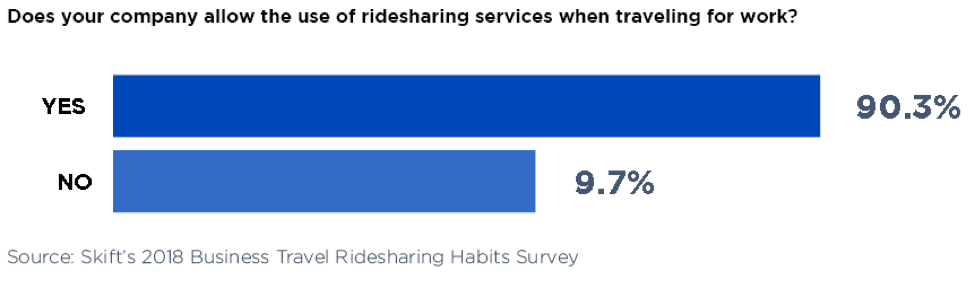
So what is driving this change in executive adoption of the sharing economy? It really comes down to the maturation of the companies involved. You’ve seen many of the companies go from industry disrupters focused on the consumer market to mainstream leaders with impressive corporate offerings, and the results speak for themselves. In fact, a 2018 Skift study of the transportation habits of business travelers in the U.S. found that more than 79% of respondents chose ridesharing as their first ground transport choice. This was ahead of taxis, rental cars, and car services, citing ease of use (86% of respondents), simplicity of payment (65%), and low cost (41%).
Data Breaches Are More Common Than Ever
If it seemed like more organizations disclosed data breaches last year than ever before, it is because more did. At 1,579, the number of breaches in 2017 was 44.7% higher than the 1,091 disclosed in 2016. While that number may seem staggeringly large, it is smaller than the 4.8 billion records exposed in data breaches in 2016. Unfortunately, stats like this go on and on. But they really only point to one thing: data security is an incredibly difficult, yet important task.
However, companies are fighting back. Through better employee education about the perils of network irresponsibility and better processes for data protection, companies can drastically decrease the likelihood of a data breach.
Rigorous Data Standards Provide Protection
More and more companies are protecting themselves by conforming to rigorous standards to become PCI compliant or even PCI certified. PCI certification is a comprehensive process that involves a full-scale audit by a qualified security assessor (QSA). The QSA validates all areas of the business to ensure proper controls and security measures are in place to protect the customer. Companies who deal with federal entities are in-creasingly becoming FISMA compliant. This is one of the most important regulations for federal data security standards and guidelines. It was introduced to reduce the security risk to federal information and data while managing federal spending on information security.
There are also measures that travelers can and should take to protect themselves from a data breach. Things such as creating complex passwords with no ties to your personal life and updating them regularly, can go a long way. You should also monitor your credit card statements and set up spending alerts so you can be immediately notified if anything out of the ordinary happens.
Data Security to Remain Top Priority
While no one knows for sure where the exponential growth of technology will take us, one thing is certain—data security is only going to grow in importance. Knowing this, it is critical that all companies you do business with are properly vetted to ensure they do not engage in network practices that put you and your clients at risk of a data breach.
As a testament to our commitment to data security, ADTRAV is PCI certified and FISMA compliant to ensure our clients’ data is protected to the highest degree. Curious what all of that means? Stay tuned for an upcoming blog post!